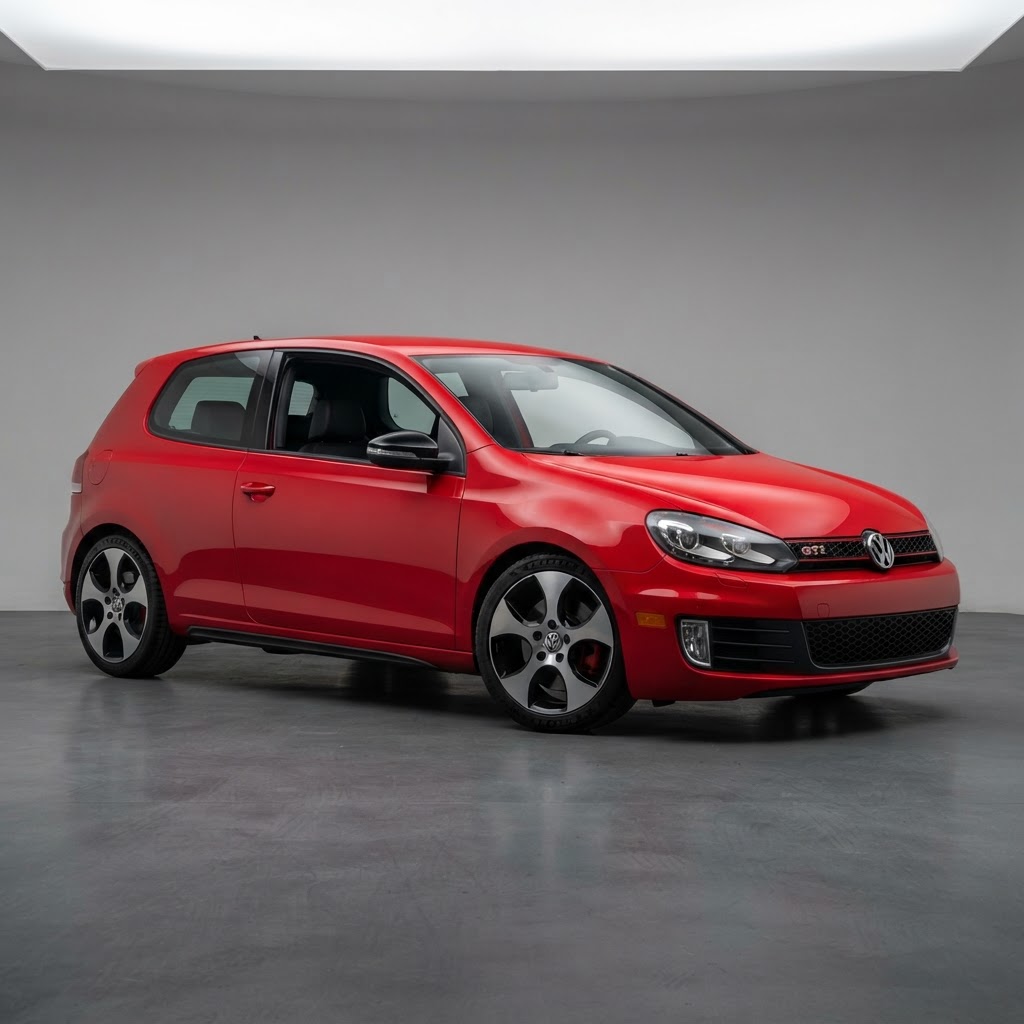
A Mk5 with the rough edges filed off
The Mk6 GTI is the same PQ35 platform as the Mk5, but with a quieter cabin, better seats, sharper front-end styling and the EA888 generation 2 engine. It is the more grown-up car of the two: still quick, still genuinely good to drive, but noticeably more comfortable over a long day.
The catch is that the engine changed, and with it the failure mode. The Mk6's 2.0 TSI is chain-driven, and early cars were built with a tensioner that could fail and let the chain jump. That is an engine-out, valve-bending failure, not a warning light.
The tensioner question
Volkswagen revised the tensioner, and the revised part is what you want to see evidence of. Cars built from roughly 2012 onwards left the factory with the updated design; earlier cars may or may not have been done under warranty or by a specialist since.
There are three practical checks. First, listen from cold: a rattle from the timing case at start-up that fades as oil pressure builds is the classic warning. Second, read the service history for a tensioner replacement. Third, if you are serious about the car, pay a specialist to inspect it, because the cost of being wrong is a cylinder head.
This is not a reason to avoid the Mk6. It is a reason to buy the right Mk6 and to budget for the job if the history is silent.
What else to check
- Water pump and thermostat housing. The plastic housing warps and weeps. Look for pink residue at the front of the engine and ask whether the pump has been replaced.
- Intake carbon. Direct injection means the inlet valves carbon up. Rough idle and a slight loss of top-end power are the symptoms; a walnut blast is the fix.
- Diverter valve. The later piston-type valve is more reliable than the early diaphragm, but it still fails. Boost loss and a soft whistle are the giveaway.
- DSG oil. DQ250, every 40,000 miles, or the mechatronic unit becomes a four-figure repair.
- Tailgate wiring loom. The loom flexes where it enters the hatch and breaks, taking the rear wiper, number plate lights and boot release with it.
- Sunroof drains. Blocked front drains put water into the footwell and the A-pillar trims.
- Front wings. Same rust trap as the Mk5. Check the flange behind the arch liner.
Suspension and fitment
5x112, 57.1 mm bore, offset around 45 to 50 mm. The Mk6 GTI's factory 18 inch wheel is a good design and a good fit; aftermarket wheels usually look best in the same size with a slightly more aggressive offset.
A 30 mm drop on quality springs is the sensible modification. The Mk6 rides well and turns in cleanly, and lowering it beyond that on standard dampers trades grip for stance in a way you will notice on a B-road.
If you are chasing more power, spend the money on a rear anti-roll bar and good tyres before you spend it on more boost. The chassis is the part that rewards attention.
What it costs to run
High twenties to mid thirties mpg on petrol depending on how you drive, around 50 for the TDI. The recurring costs are the DSG service, the water pump and the carbon clean. The big-ticket risk is the chain and tensioner, and a car with documented work there is worth a meaningful premium over one without.


