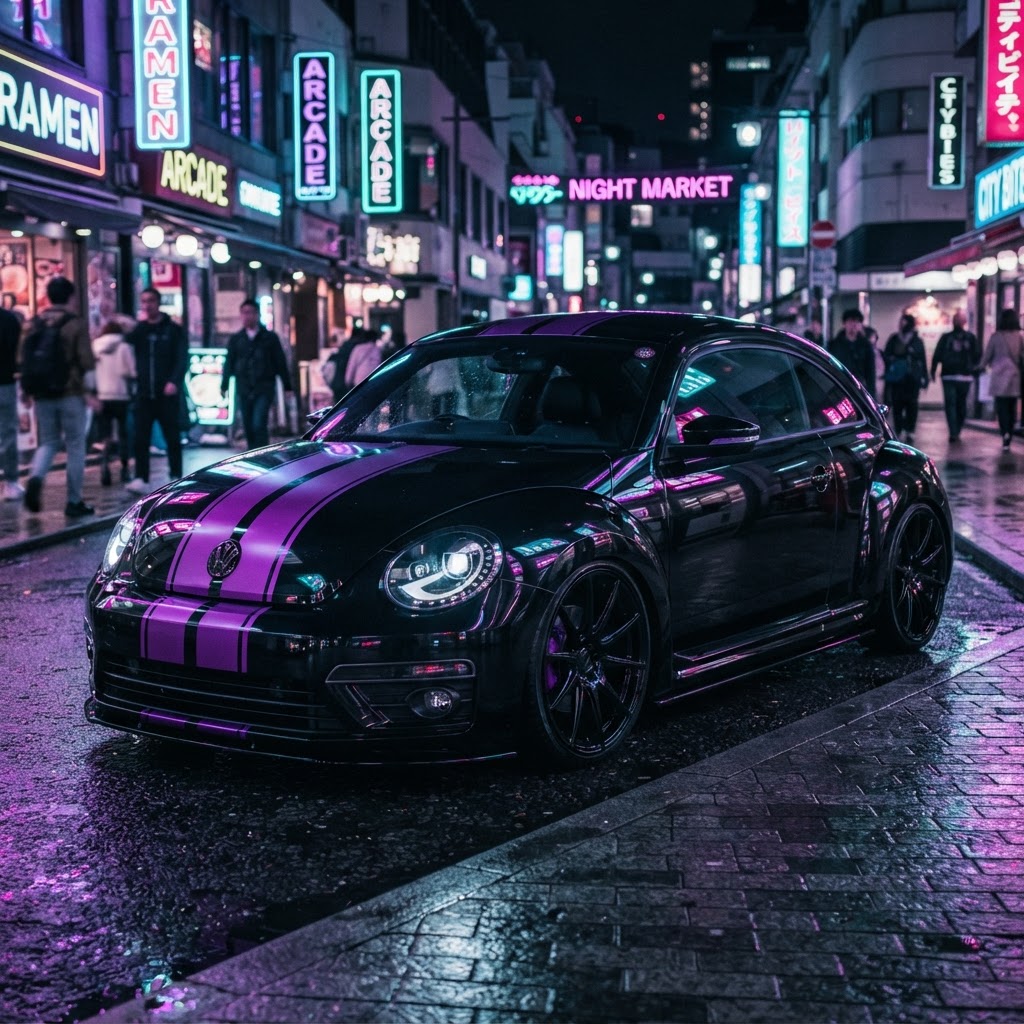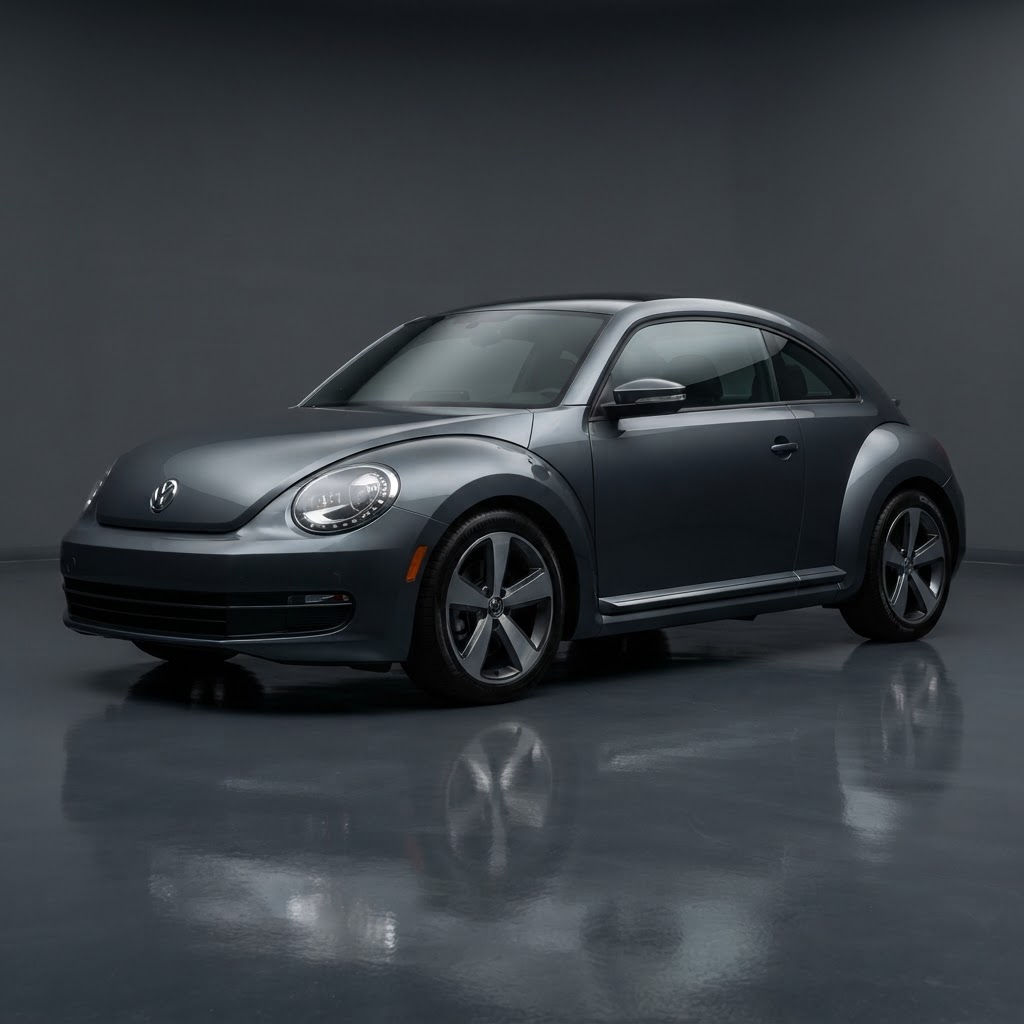
A different car from the New Beetle
The 2012 car dropped the word New and almost everything else that made the earlier Beetle a novelty. It sits on the PQ35 platform, so it shares its floor, suspension and engines with the Golf Mk6 and the Audi A3 8P, and it is wider, lower and longer than the car it replaced. The boot is 310 litres, the driving position is a normal hatchback driving position, and the ride is properly sorted rather than merely tolerable.
That makes the A5 the Beetle to buy if you intend to use it. It is also the one where being a Beetle costs nothing mechanically: every part under the body is a Golf part.
One wrinkle on the model year: the A5 was built from 2012 until Beetle production ended in July 2019, but the VW Build configurator's A5 model covers the 2012 to 2014 launch range. If your car is a later one, the body is the same and the styling advice on this page still applies, but check trim and wheel specifications against your own build sticker.
Which engine
The 2.0 TSI is the one enthusiasts want: 200 to 210 PS, around 6.9 seconds to 62 mph, and it takes a remap without drama. It is an EA888 generation 2 in most cars, which matters for the timing chain, discussed below.
The 1.4 TSI at 160 PS is the twincharger EA111, an engine with real character and strong mid-range, but it has a supercharger clutch and a chain that both want attention. The 1.2 TSI is the sensible urban choice and the 1.6 TDI returns over 65 mpg on a run if you accept the diesel maintenance load: DPF, EGR and a dual-mass flywheel.
If you are buying the automatic, know which one you are getting. The seven-speed dry DQ200 on the smaller engines has a mechatronic unit that fails; the six-speed wet DQ250 on the 2.0 is stronger but still needs its oil changed every 40,000 miles.
What to check before you buy
- Timing chain on the 2.0 TSI and 1.4 TSI. On EA888 generation 2 the original tensioner is the well-known failure. Ask whether it has been updated and listen for a rattle on cold start from the timing case.
- Oil consumption on the 2.0 TSI. Early EA888s can drink oil. Ask how much the owner tops up between services and check the level yourself.
- DSG oil history. A DQ250 with no 40,000 mile oil changes is a mechatronic repair waiting to happen. Invoices, not assurances.
- Water pump and thermostat housing. The plastic housing weeps coolant on these engines. Look for dried pink residue around the front of the block.
- Diesel emissions hardware. Short-trip 1.6 and 2.0 TDIs clog DPFs and EGR coolers. Check for a recent forced regeneration or a warning light that has been cleared.
- Roof and boot seals on the convertible. Water in the boot floor and behind the rear trims is common on cars kept outside.
Fitment: this is where most buyers go wrong
The A5 is PQ35, so it runs a 5x112 stud pattern with a 57.1 mm centre bore, not the 5x100 of the New Beetle. Several fitment charts online still list the A5 as 5x100 because they copied the older car; buying 5x100 wheels for it is a mistake you only make once.
An 18 inch wheel with an offset around 45 to 50 mm and a 225/40 tyre sits correctly in the A5's flatter arches. Go wider and you will chase rubbing at the front on lock. Lowering by 30 mm is the sensible limit on standard dampers; the A5 rides well and there is no reason to ruin it.
What to change first
These cars are good enough that the first job is maintenance, not modification. Chain and tensioner verification, fresh DSG oil, a coolant system check and correct tyres will cost less than a body kit and matter far more.
For styling, the biggest wins are the things the factory got slightly wrong: the standard wheels are conservative, the rear lights on early cars can be upgraded to the later LED-style units, and a modest drop transforms the stance. Avoid the temptation to fit a large rear wing; the A5's shape does not need it and the hatch is heavy enough to make the struts complain.
Running costs
Servicing is Golf money, which is to say reasonable. Budget for the DSG oil every 40,000 miles, a water pump at some point past 80,000, and a chain and tensioner job on a 2.0 TSI if it has not been done. The 1.6 TDI is the cheapest to run and the most expensive to put right when the emissions hardware goes wrong.