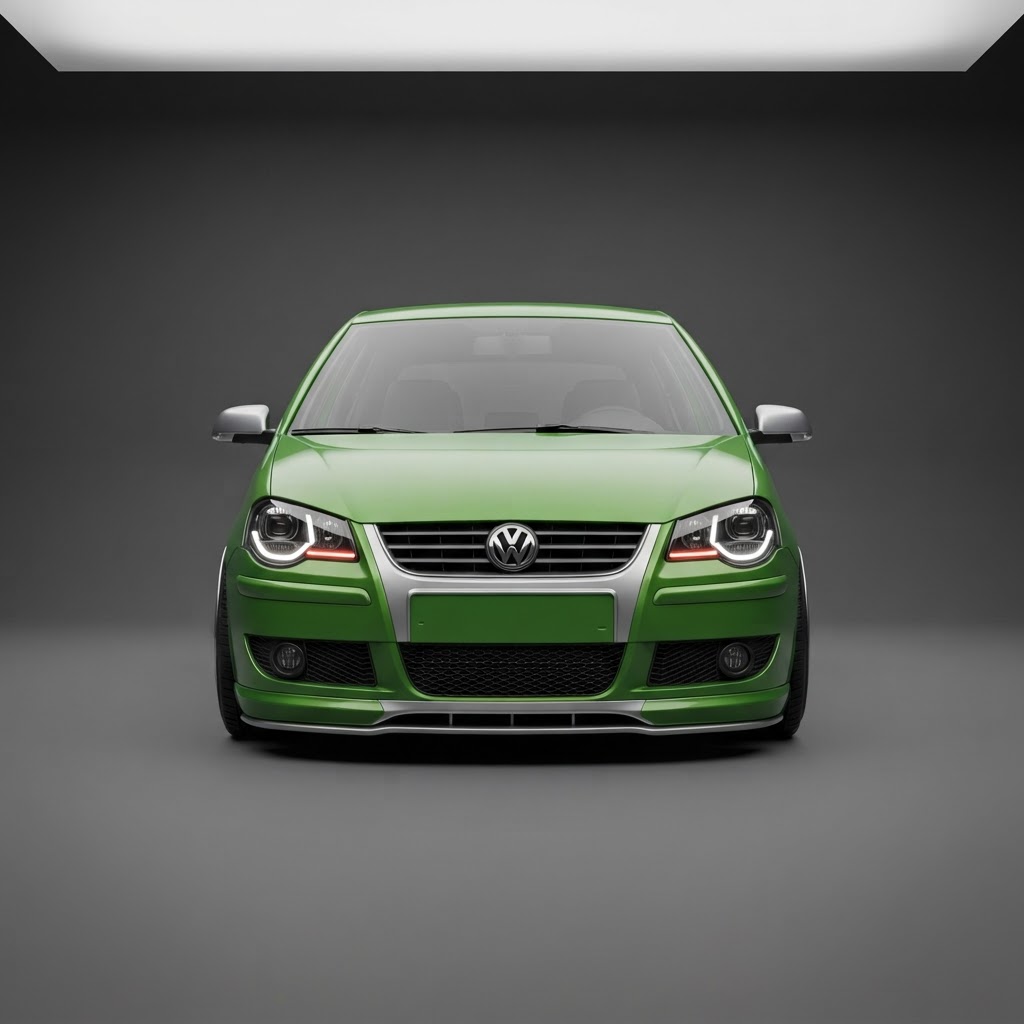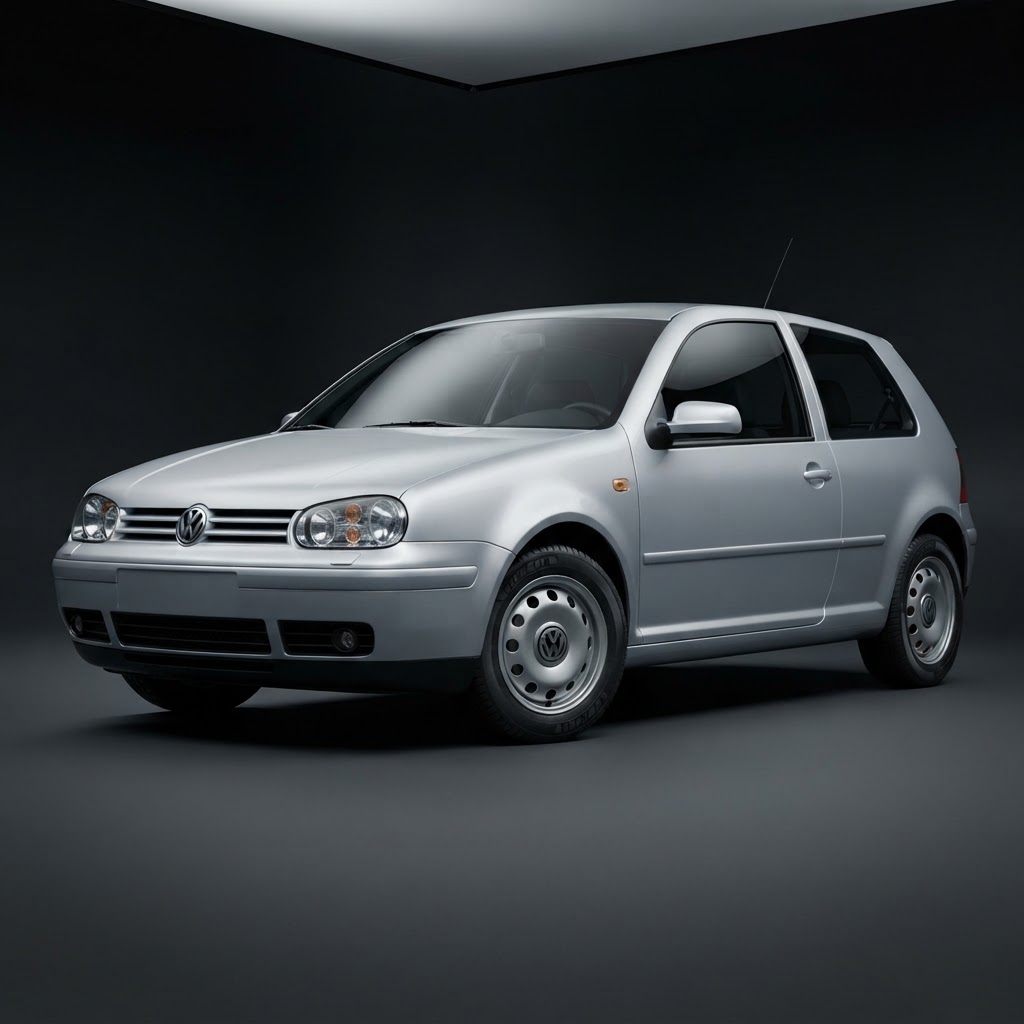
The underrated one
The 9N Polo is the car that made the supermini feel expensive. Thick door shut, soft-touch dash, a proper six-speed gearbox on some models and a chassis that rides like a car two sizes up. Nobody bought one for excitement, which is exactly why so many survive in decent condition and why they are so cheap now.
Mechanically it sits on PQ24, shared with the Lupo and the SEAT Ibiza, so consumables are inexpensive and there is a real aftermarket for suspension, wheels and styling. The 5x100 hubs mean wheels from the Golf Mk4 and New Beetle bolt straight on, which is why so many of these cars end up lowered on a set of borrowed alloys.
The 1.6 16v is the warm one at 125 PS and the only version that feels quick. The 1.4 16v at 75 PS is the sensible volume car. The 1.9 TDI is the one for high mileage, and the 1.0 and 1.2 are fine around town and painful on a motorway slip road.
Our configurator models the 1999–2002 cars; the same body and fitments carried through the 2001 facelift, so the styling advice here holds for the whole 9N run.
What to check before you buy
- Electric power steering. The 9N uses an electric column with a torque sensor. A warning light, heavy steering at low speed or a car that self-steers slightly is a column or sensor fault, and it is not a cheap one.
- Coil packs on the petrol engines. A misfire that appears in damp weather is usually this. Cheap to fix, but a good bargaining point.
- Window regulators. Cables and plastic sliders fail. Cycle every window and listen for a scrape.
- Rear axle bushes. Worn bushes make the rear end feel loose and chew the inside edge of the rear tyres.
- Timing belt on the 16v engines. Belt-driven and interference. No invoice means assume it is due, along with the water pump.
- Gearbox noise. The 085 gearbox develops bearing whine, especially on the 1.4. Listen in third and fourth on a light throttle.
- Rust at the rear arches and the tailgate handle. These cars are old enough now that corrosion is a real factor in the north.
What goes wrong that costs money
The heater matrix is a dashboard-out job when it leaks, and the tell is a sweet smell and a misting windscreen. The throttle body and EGR valve on the 1.4 16v soot up and cause a hunting idle. The clutch is cheap but the release bearing gets noisy. None of these are catastrophic; together they are why you should buy the best example rather than the cheapest.
On the diesel, the 1.9 SDI is slow but almost unbreakable, and the 1.9 TDI wants its belt history and its inlet manifold cleaned. The dual-mass flywheel rumbles at idle on high-mileage cars.
What to change first
A set of tyres transforms these cars more than any modification, because the standard sizes are narrow and most used examples are on cheap rubber. After that, a 30 mm drop on springs and dampers and a set of 15 or 16 inch wheels give the car the stance it was always missing.
Do not over-wheel it. A 17 inch wheel on a 9N Polo looks wrong, ruins the ride and, on a 1.0 or 1.2, ruins the acceleration too. A 16 inch wheel with a 195/45 tyre is the sweet spot for the heavier-engined cars.
Fitment and stance
5x100 PCD, 57.1 mm centre bore, offset around 35 to 45 mm. The 1.6 16v runs 256 mm front brakes and the smaller-engined cars run 239 mm, which is worth knowing if you are fitting bigger wheels and want them to look filled.
Check the front strut clearance on wider wheels. The Polo's arches are shallow and the liner is close, so anything wider than about 7 inches needs care.
Running costs
Cheap. The petrols do 40 to 45 mpg, the TDI does 55 and the SDI does more. Parts are among the least expensive in the VW catalogue and every job has been documented on a forum somewhere. Insurance is low on the small-engined cars, which is why so many are still on the road.